
Every pinball enthusiast dreams of finding a classic machine for free. For my client David in Winchester, that dream came true 15 years ago when he rescued a 1968 Gottlieb Funland straight out of a skip. He managed to get it into his car and safely home, but the game never played 100%. Eventually, it stopped working altogether and sat completely dormant for the last 10 years.
Recently, I was called out to Winchester to see if we could finally get this beautiful piece of arcade history flipping again.
The Challenge of On-Site EM Repairs
Bringing a long-dormant Electro-Mechanical (EM) pinball machine back to life is typically a job reserved for the workshop. It usually requires days of methodical cleaning and testing. However, given the distance to Winchester, I decided to tackle this revival entirely on-site in David’s home.
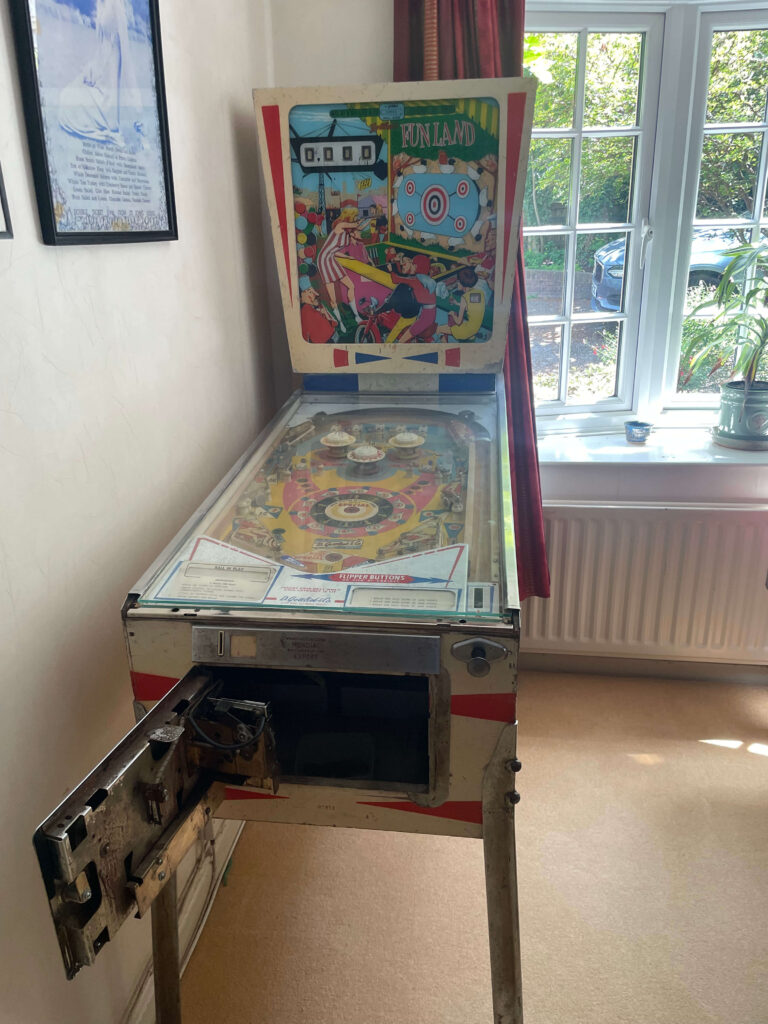
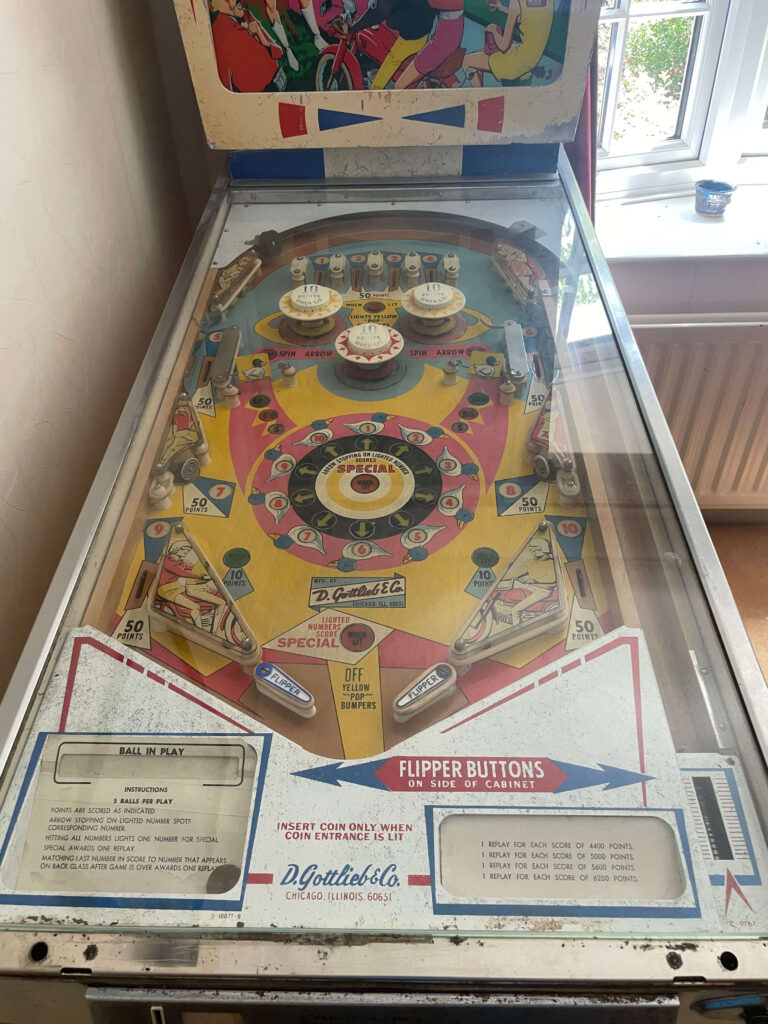
The initial diagnosis was tough. After sitting unused for a decade, the mechanical components had seized, and the electrical connections were severely compromised. It took a solid 5 hours of non-stop troubleshooting to revive the heart of the machine. The work included:
- Overhauling Stepper Units: Stripping, cleaning, and re-lubricating all the stepper units so they could step up and reset smoothly.
- Restoring Jones Plugs: The main connectors (Jones plugs) were heavily oxidized and coated in dirt, causing massive power loss across the game.
- Switch Adjustments: Tracking down loose wires and adjusting dozens of temperamental switch contacts that were preventing the game from starting its sequence.
There was a brief moment during the repair where the sheer number of contact issues made me think I might have to load the machine into my van, but persistence paid off!
Preservation and Cosmetic Refresh
The goal wasn’t a factory-new, high-end restoration; David just wanted his game to look beautiful and play reliably.
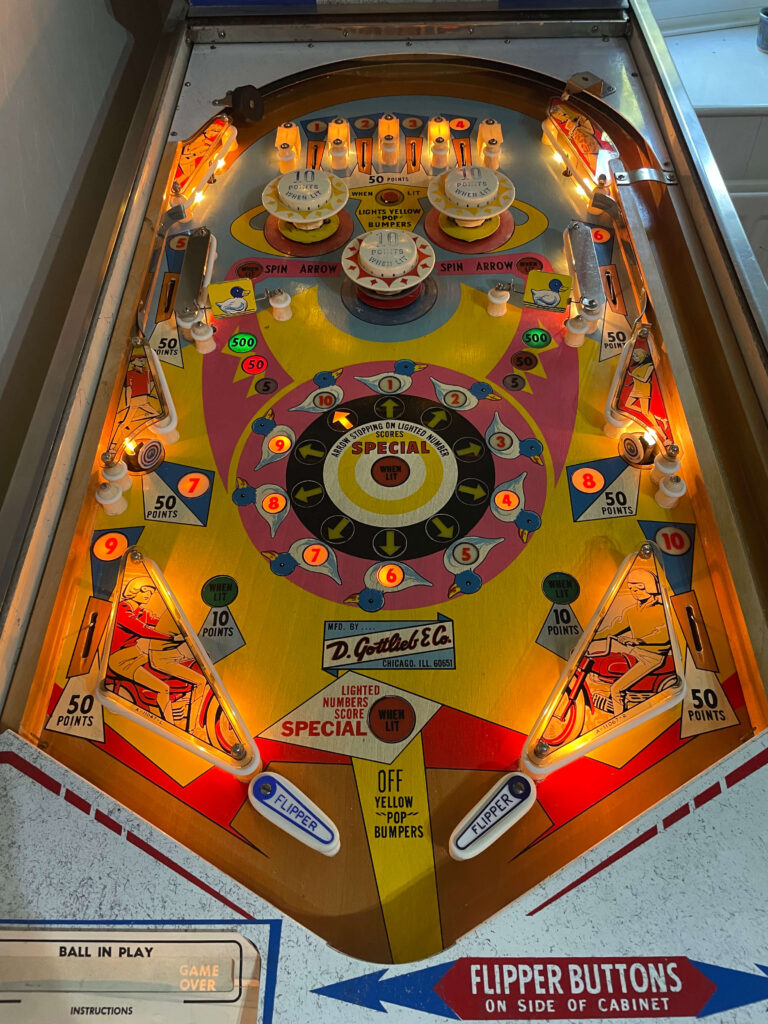
Once the mechanical heartbeat was restored, I spent an additional hour giving the playfield the love it deserved. I stripped the old parts, performed a deep clean, applied a fresh coat of wax, and installed a brand new set of rubber rings.
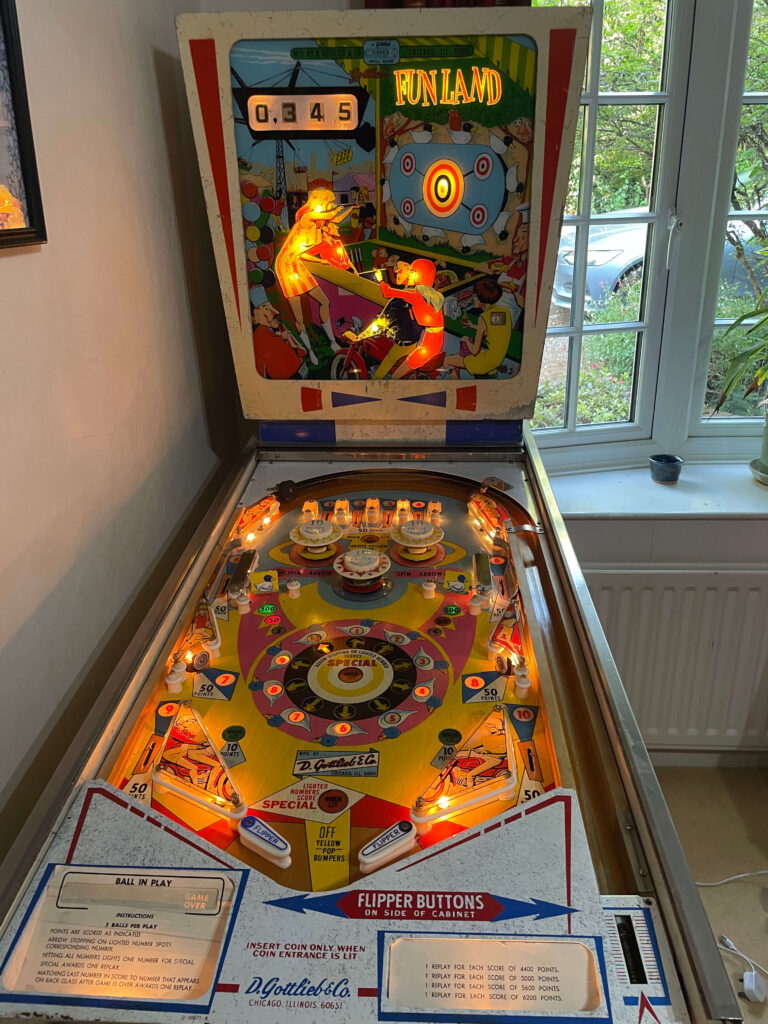
A crucial preservation step: The original backglass artwork was starting to delaminate and flake. Traditional incandescent bulbs generate a lot of heat, which accelerates this damage. To protect the art for decades to come, I converted the backbox to LEDs. They run virtually cold and give the 1968 artwork an incredibly vibrant glow.
The Final Result
The transformation was fantastic. It’s always incredibly rewarding to avoid a workshop removal and fix a complex machine directly in the customer’s home. David was absolutely thrilled to finally play his skip-find treasure exactly as it was meant to be played back in 1968.
Need your classic machine brought back to life? Get in touch!