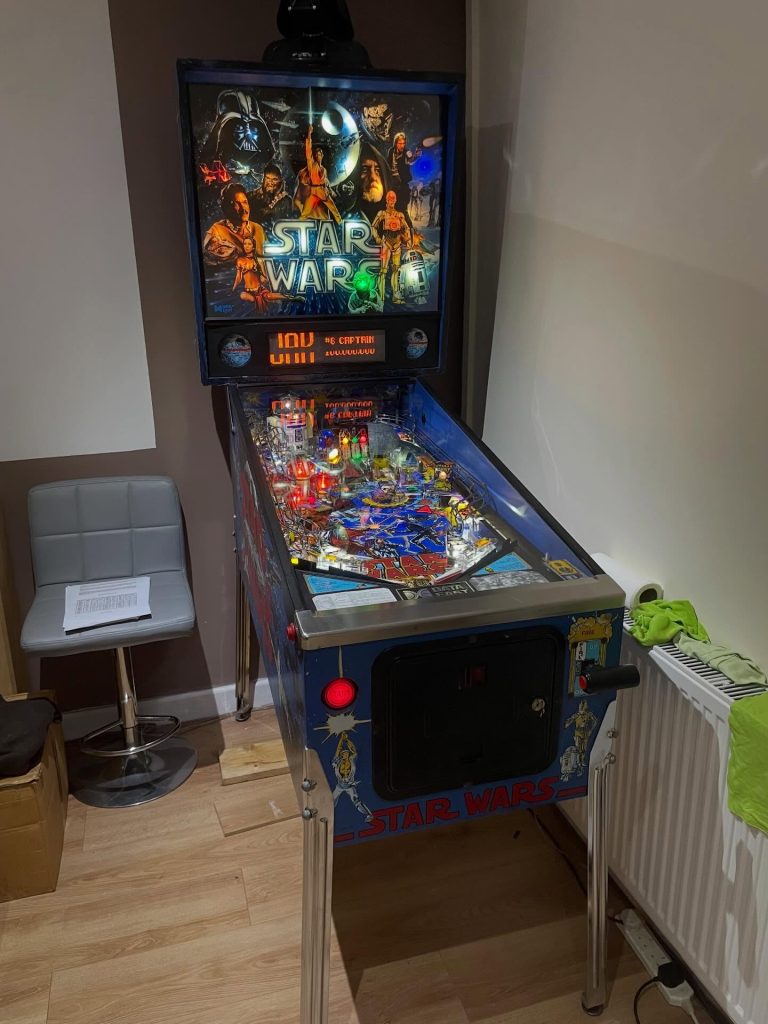
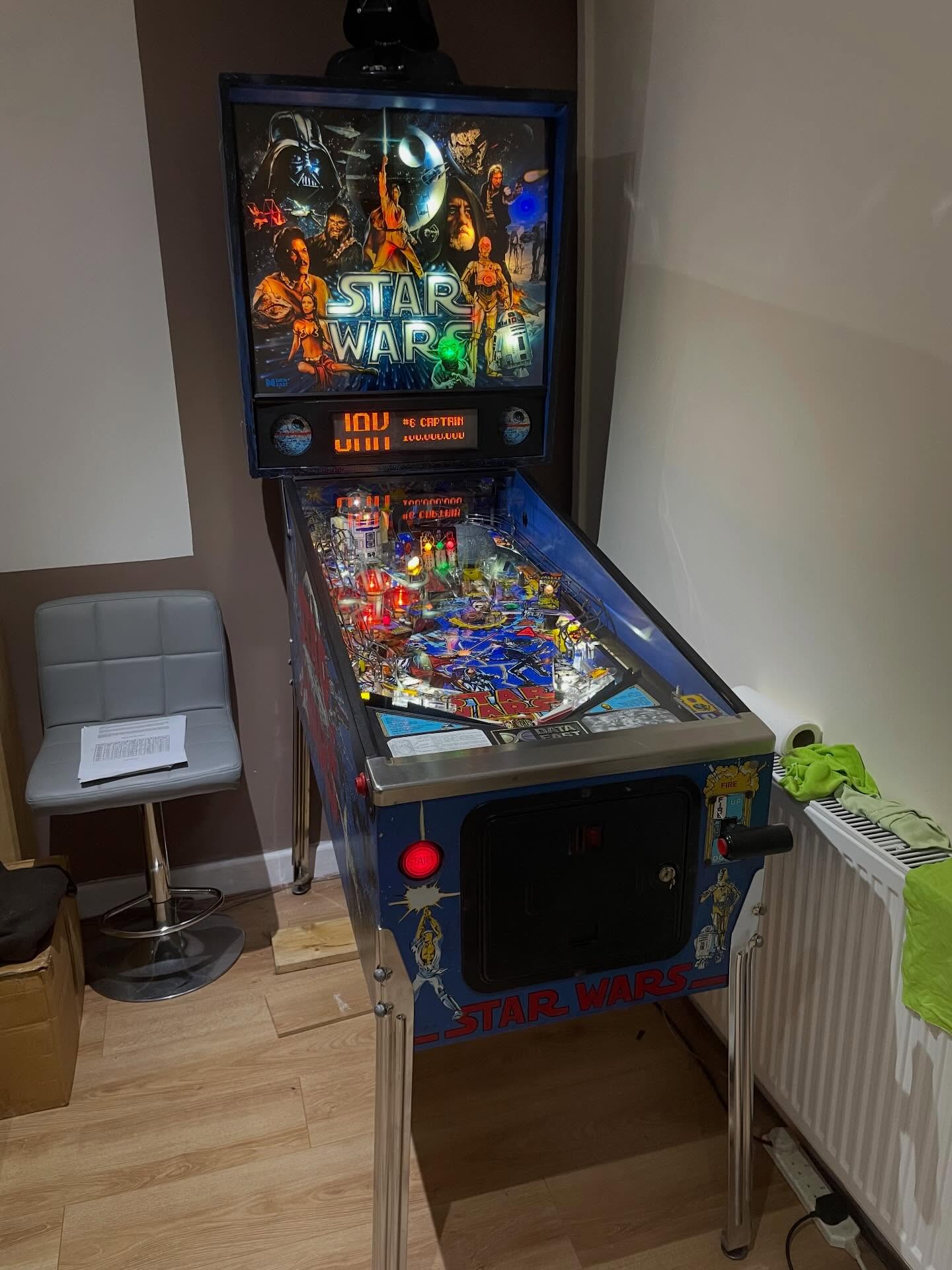
The Quest for the Childhood Machine
Finding the specific pinball machine you played in your youth isn’t easy. You can’t just walk into a shop and pick one up. That is why, when this client finally found his “Holy Grail” — a Data East Star Wars (1992) — he didn’t hesitate to buy it, even though it meant shipping it all the way from Scotland to Cardiff.
The seller promised the game was “perfect.” But as is often the case with long-distance vintage purchases, reality hit hard upon arrival.
The Problem: A Disturbance in the Force As soon as the game was set up, it became clear it wasn’t playable. The issue? A severe “Phantom Switch” problem. Specifically, pressing the Launch Button would simultaneously activate the Start Button. In the Switch Matrix (the grid system the computer uses to read switches), signals were getting crossed.
The Diagnosis: Logic Probe Analysis The owner and his brother had already tried to fix a loose wire, but the fault lay deeper.
- Isolation: First, I disconnected the playfield switches to confirm the fault was on the CPU board, not under the playfield.
- Logic Testing: Using a logic probe, I analyzed the Switch Matrix rows. On a Data East CPU, these pins should pulse rapidly. Instead, I found two rows were stuck high.
- Component Check: The diodes and drive transistors tested fine, leaving one main suspect.
The Real Culprit: The PIA Chip The evidence pointed to the 6821 PIA Chip (Peripheral Interface Adapter) responsible for the switch matrix. It had failed internally, likely due to age or a previous short.
The Fix I took the board to the bench for the repair:
- Verified the lack of pulsing on the bench (see video).
- Desoldered the faulty chip and cleaned the tracks.
- Installed a high-quality IC Socket (crucial for future repairs).
- Inserted a brand new PIA chip.
The Result Back in the machine… BOOM! The Death Star is ready to be destroyed again. The game plays perfectly, the phantom switches are gone, and the owner can finally enjoy the game he remembered from his childhood.
Lesson learned: “It works perfectly” should always be verified, especially with 30-year-old electronics!